This page is an AI-assisted English translation that is under review by native speakers and medical reviewers. The Korean version is the reference. Questions: +82-2-6205-1236

Core care

Facial AsymmetryLeft–right differences in the face,examined together with movement.

Facial balance cannot be explained only by the left–right difference you see from the front. At MODNI we look at the facial midline and left–right balance, and also at how the jaw joint moves, how the surrounding muscles function, and how tension is distributed in the neck and shoulders.

Last updated Medical review in progress

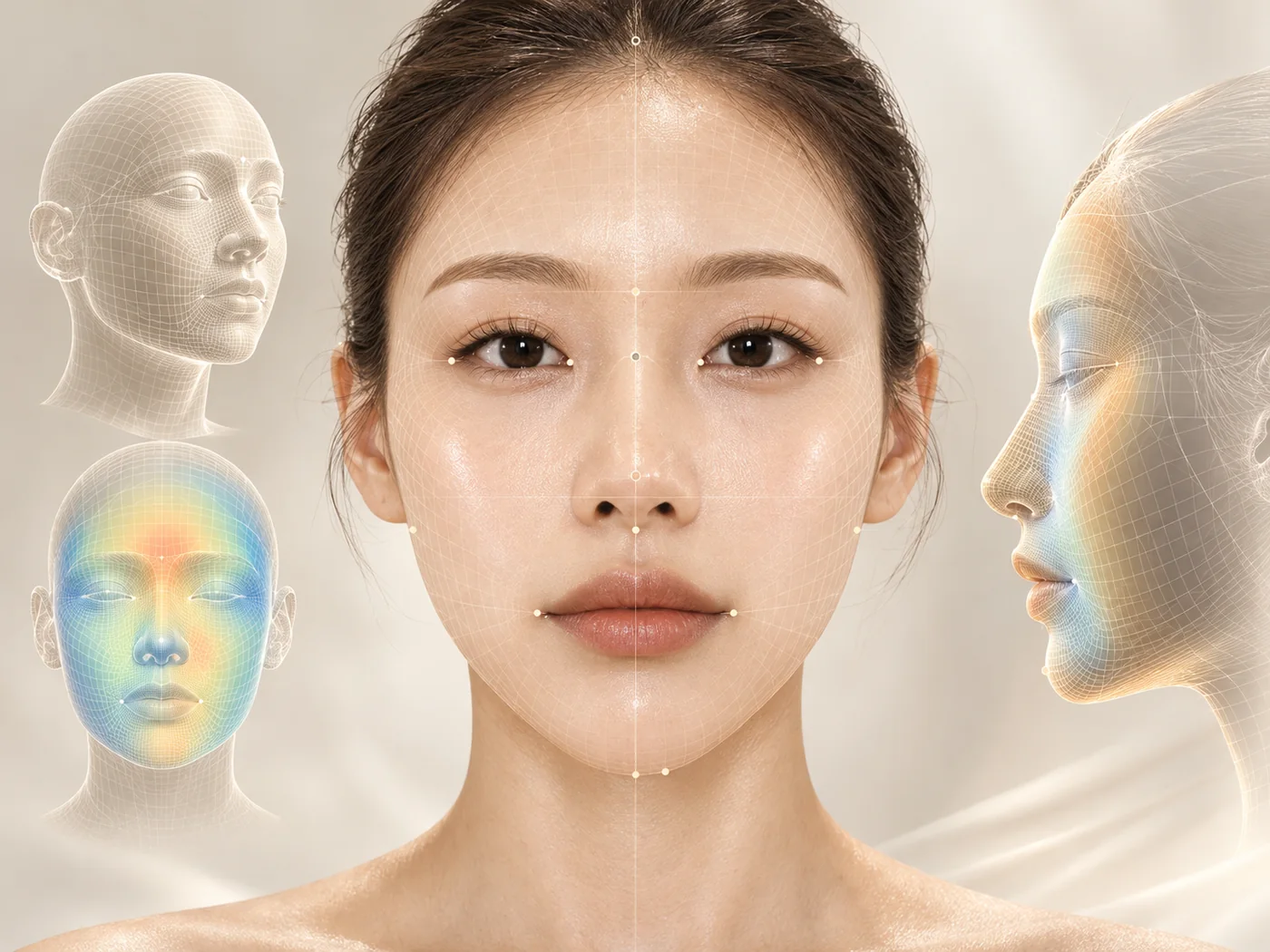
An explanatory image showing a front view of a face beside a 3D surface mesh and colour map, illustrating the concept of a 3D facial surface record
An image explaining the concept of a 3D facial surface record. The lines and colours are illustrative examples, not actual measurements or diagnostic results.

Facial asymmetry at a glance

01

Facial shape

Facial asymmetry refers to differences in shape between the left and right sides of the face. Structural factors, such as the bones and how the teeth meet, may be involved; when a difference is clear, we also recommend assessment by the relevant medical or dental specialty.
02

Movement and function

Functional factors may also be involved, such as how the chewing muscles are used on each side, how the jaw moves when the mouth opens, tension in the neck and shoulders, and daily habits.

03

How MODNI assesses it

The director uses a 3D facial surface record and an in-person examination to check the facial midline and left–right contours, jaw movement, and tension in the neck and shoulders, and then explains an individual care plan. Korean medicine care does not change the shape of bone.

How we look at facial asymmetry

A perfectly symmetrical face is rare. What matters in care is not whether a difference exists, but where it comes from and whether it comes with discomfort.

At MODNI we do not look at facial asymmetry and the jaw joint separately. Within a single examination we check the shape of the face at rest together with the path of opening and closing, the movement of the left and right jaw joints, and tension and usage patterns in the neck and shoulders. Rather than rushing to decide what to change, we begin by being clear about what needs to be checked first.

Structural and functional factors

The direction of care depends on which factors play a larger role, so we separate them first.

Structural factors
Factors related to form itself, such as differences in the shape and growth of the upper and lower jaws and how the teeth meet. When the difference is clear, assessment by an orthodontist or an oral and maxillofacial surgeon may also be needed.
Functional factors
Factors related to how the face is used, such as left–right use and tension of the chewing muscles, jaw joint movement, and neck and shoulder tension. This is the main area that Korean medicine care addresses.
Daily habits
Repeated habits such as chewing on one side, resting your chin on your hand, sleeping face down, or keeping your head bent for long periods. We review these during the examination.

How we look at the midline and left–right shape

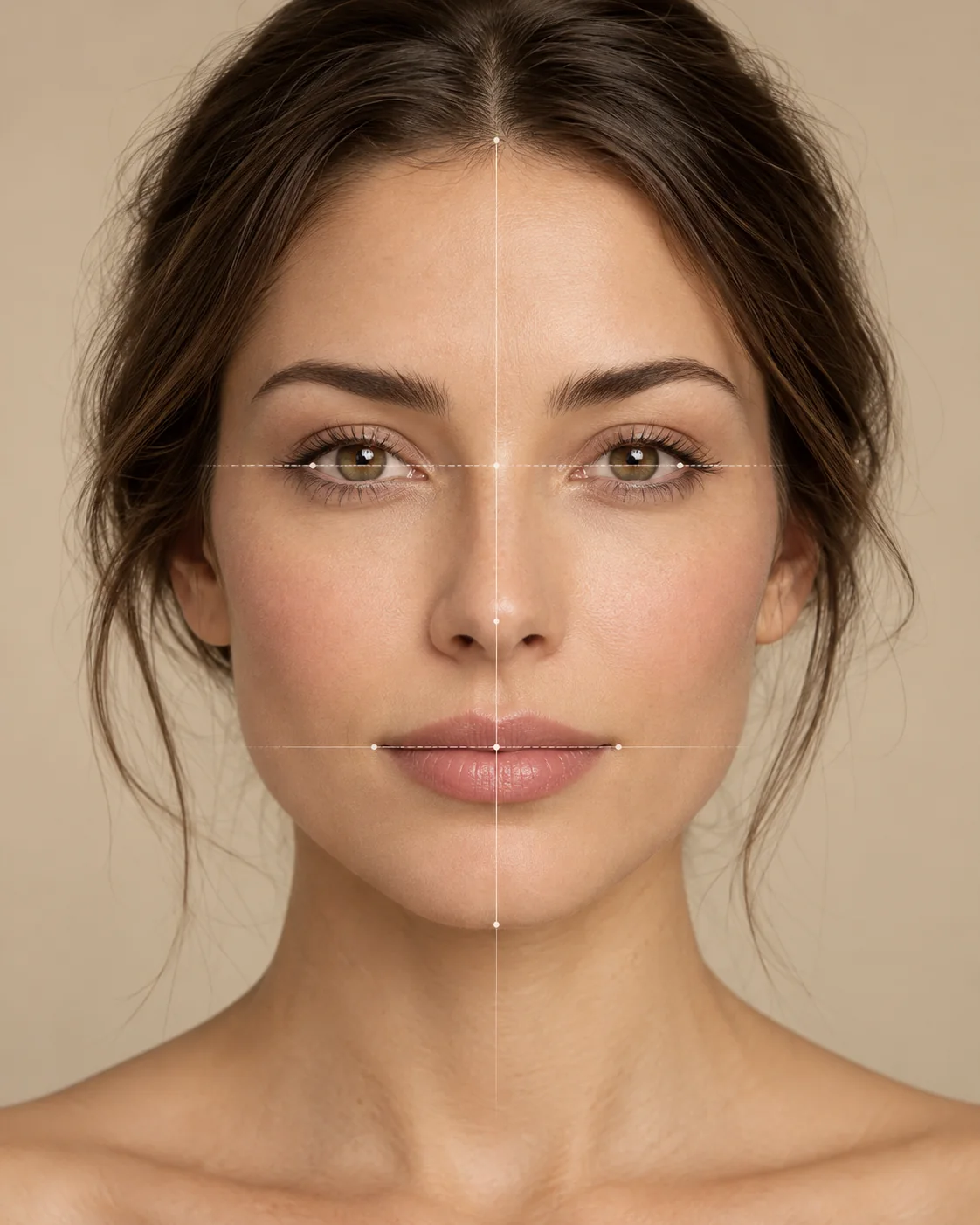
During the examination we trace the facial midline through the point between the eyebrows, the tip of the nose, the base of the nose above the upper lip, the meeting point of the lips, and the chin. Using eye level and the height of the mouth corners as horizontal references, we compare left and right heights, and we flip the outline of one side over the other to look at differences in shape.

The lines in the illustration explain the method of observation and are not actual measurements.

An explanatory image of a face seen from the front, marked with a vertical midline and horizontal reference lines at eye and mouth level
  1. 01Midline
  2. 02Horizontal references
  3. 03Left–right comparison
An image explaining how the left and right sides are examined using a midline and horizontal reference lines. It is not measurement data from an actual patient.
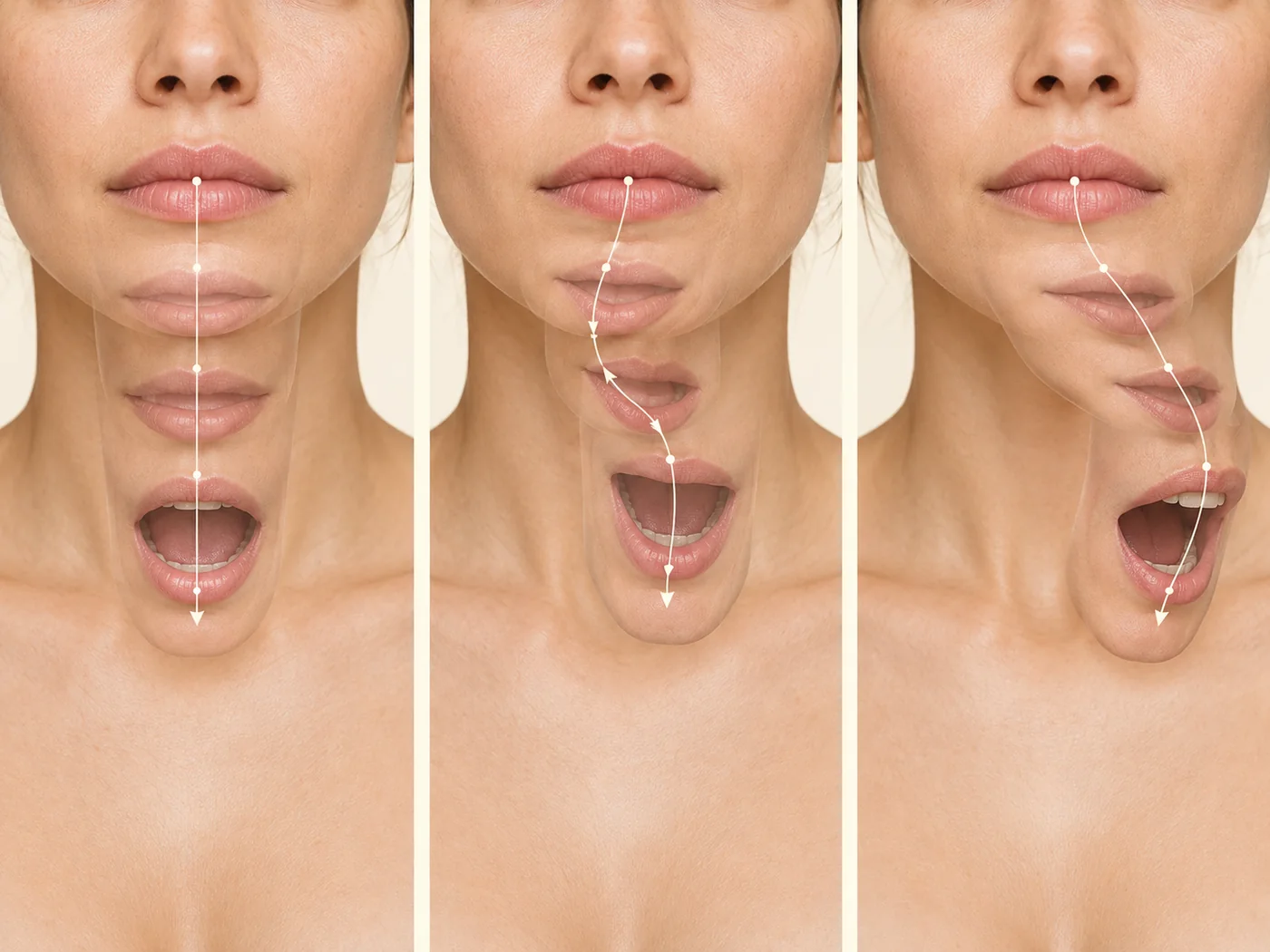
An explanatory image showing three side-by-side examples of the path the chin follows as the mouth opens
  1. 01Straight · opens along the midline
  2. 02Deviation · shifts, then returns
  3. 03Deflection · opens while shifted
An explanatory image comparing paths of the chin as the mouth opens. It is not an actual patient's record.

Why we also check jaw movement

Two people whose asymmetry looks similar in a front photo may differ: in one, the chin shifts to one side when the mouth opens; in the other, neck and shoulder tension is concentrated on one side.

So we check the path the chin follows as you slowly open and close your mouth, how wide it opens, any sounds from the joint, and where it feels uncomfortable. A path that shifts to one side midway and then returns (deviation) and a path that stays shifted as the mouth opens (deflection) may involve different factors, so we record them separately.

The role of the 3D facial record

A 3D facial record is a clinical record that captures the shape of the skin surface of the face in three dimensions. It helps us view differences in left–right volume and contour from several angles that are hard to see in a front photo.

Its most important use is comparison. Your initial state is kept as a baseline, and later changes and progress are checked against that same baseline.

What a 3D record can and cannot tell us

  • A surface record captures the outer shape of the skin. It is not an imaging test of bone structure or the inside of the joint, and it is not used on its own to confirm a skeletal cause.
  • Results can vary with recording conditions, facial expression and posture, so they are always interpreted together with the director's examination.
  • The record is a tool for checking change; it does not prove or guarantee the effect of treatment.

What actually happens at the first visit

First-visit time

About 60 min

A 3D facial surface scan is included by default in the first visit for facial asymmetry. The director personally carries out everything from assessment and explanation of the findings to the treatment plan, the treatments themselves and later follow-up assessments.

StandardIf needed

  1. 01Your concerns

    We first listen to what has been bothering you, since when, and the differences you notice in photos or in the mirror.

  2. 02Initial history

    We ask about past dental treatment or orthodontics, jaw sounds or pain, chewing habits and sleeping posture.

  3. 033D facial surface scan

    The shape of the facial surface is recorded in 3D. It becomes the baseline for later comparison under the same conditions.

  4. 04Range of motion and function

    We check how wide the mouth opens, the path of the chin, joint sounds, and tension in the chewing muscles, neck and shoulders.

  5. 05Additional examination if neededIf needed

    If areas such as painful spots or posture need a closer look, we examine them as well.

  6. 06Explanation by the director

    The director shows you what the record and examination found and explains what appears to be involved.

  7. 07Individual treatment plan

    Together we decide what to address first, the methods of care, expected limits, and when to reassess.

  8. 08First treatment

    If you agree with the plan, the first treatment is carried out. You may also start at a later visit after hearing the explanation.

The time required may vary with your history and the scope of the examination.

Treatment at MODNI is chosen to suit your current condition.

After looking together at the shape of your face, how the jaw joint moves, the condition of the surrounding muscles and the discomfort you feel now, we selectively consider acupuncture, electroacupuncture, pharmacopuncture, Chuna therapy and, where needed, an oral appliance. Not everyone receives the same treatment, and responses to treatment differ from person to person.

Acupuncture

What is it?

Acupuncture is applied to tense areas of the chewing muscles, neck and shoulders, and to related acupoints.

When is it considered?

The basic treatment when muscle tension and discomfort are prominent.

Electroacupuncture

What is it?

A mild electrical stimulus is added to the needles and maintained for a set time.

When is it considered?

Considered when tension extends over a wide area or relaxes slowly with acupuncture alone.

Pharmacopuncture

What is it?

A small amount of a solution extracted and refined from herbal medicinal ingredients is injected into acupoints or tense areas. It is a different procedure from an intravenous (IV) injection or a vaccine.

When is it considered?

Considered when localized tenderness or knots are clear; whether to use it, and which type, is decided after the examination.

Chuna therapy

What is it?

A Korean medicine manual therapy in which the Korean medicine doctor uses the hands to assess and adjust the movement of the jaw joint, the joints of the neck and back, and the surrounding muscles.

When is it considered?

Used alongside other care when limited jaw or neck movement, or a difference in left–right use, appears to be involved.

Oral appliance

What is it?

An appliance fitted to the teeth and worn inside the mouth.

When is it considered?

Considered together with other care when needed, for example when habits such as clenching or grinding appear to be involved. It is not a treatment applied to every patient.

Korean medicine care does not change the shape of bone itself. It addresses factors related to muscle and joint function and habits of use.

How the treatment approach is decided

What we address first depends on what the examination finds. The following are examples of how decisions are made; your actual plan is explained after the examination.

  • Tension and tenderness in the chewing muscles are prominentCare centres on acupuncture and electroacupuncture, and pharmacopuncture is considered if localized knots are clear.
  • The chin shifts to one side on opening, or neck movement is limitedChuna therapy is used to address the movement of the joints and surrounding muscles together.
  • Habits such as clenching or grinding appear to be involvedWe review daily habits together and, if needed, also consider an oral appliance.
  • Skeletal differences or how the teeth meet appear to be the main factorWe explain the scope of Korean medicine care and also guide you to assessment by a dentist or an oral and maxillofacial surgeon.

How progress is checked

The initial photos and 3D record are kept as a baseline, and we record again under the same conditions and compare the records side by side. A reassessment that includes a 3D scan is carried out about every five sessions, and the timing is adjusted to your condition and the course of care.

At reassessment we review the record together with changes in symptoms and jaw movement. If the change differs from what was expected, we discuss the reasons and the next direction with you. A set number of sessions does not guarantee a result.

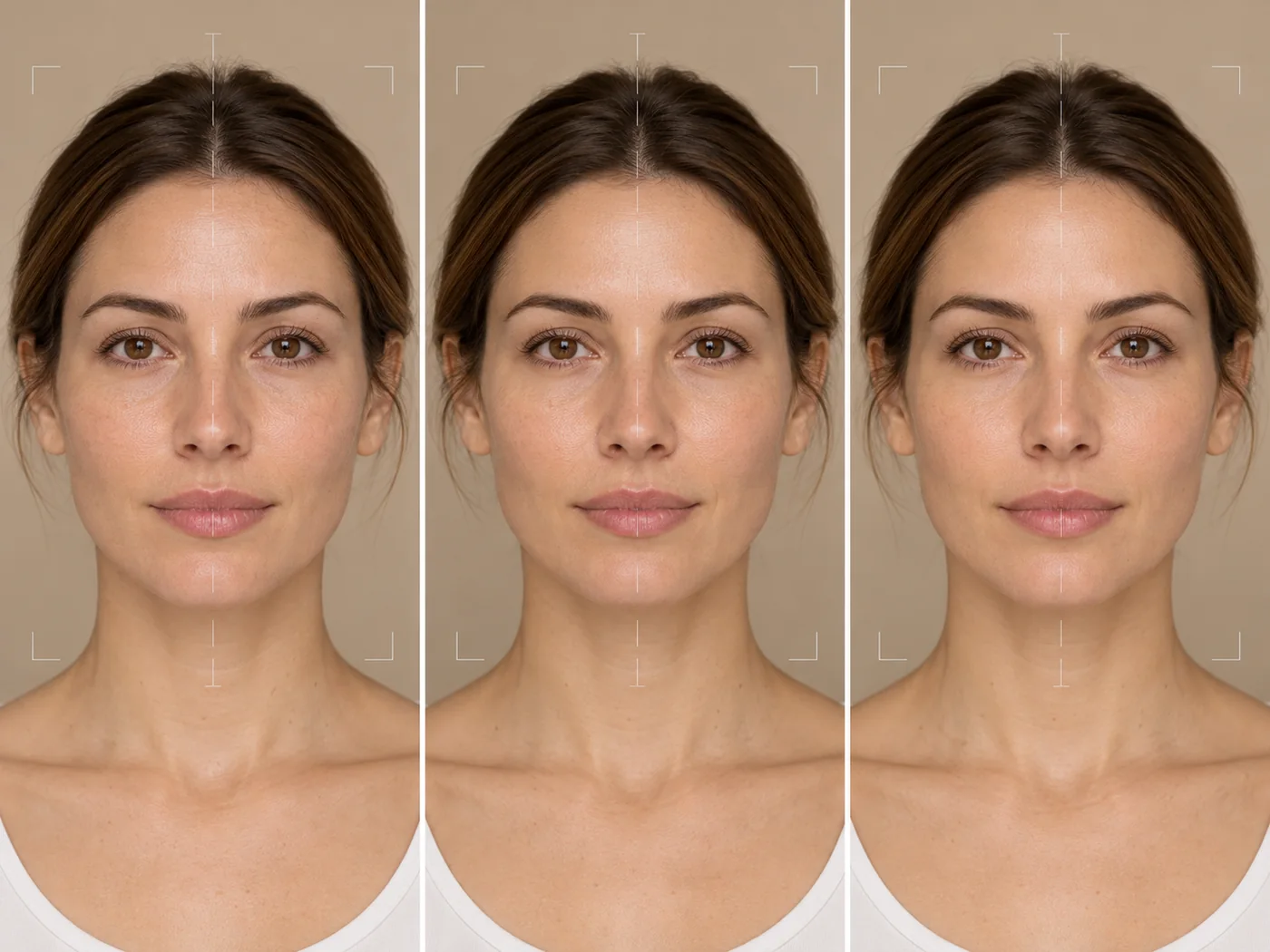
An explanatory image placing three front-view facial records taken under the same conditions side by side
  1. 01Initial record
  2. 02Progress check
  3. 03Reassessment
An image explaining how records made under the same conditions are compared side by side. It does not show an actual patient before and after treatment.

When another specialty should be consulted

  • When skeletal differences are clear or the way the teeth meet appears to be the main cause — we may recommend a consultation with an orthodontist or an oral and maxillofacial surgeon.
  • When one side of the face suddenly droops, or sensation or movement becomes abnormal — this may be a sign of facial nerve palsy or a cerebrovascular condition (such as a stroke), and immediate care at an emergency department or by a neurologist is needed.

Helpful to prepare for your first visit

  1. 1Make a note of what bothers you, since when, and in what situations you notice it.
  2. 2If you have had orthodontic or jaw-related treatment, tell us when and what it was. You are welcome to bring any test results.
  3. 3For the 3D record and photographs, comfortable clothing that leaves the line of the face visible is recommended. Heavy makeup can affect the record.
  4. 4The first visit takes about 60 minutes. Please allow enough time when booking.

Frequently asked questions

Can Korean medicine treatment change the shape of my bones?

No. Korean medicine care does not change the shape of bone itself. It addresses factors related to muscle and joint function and habits of use. When skeletal differences are large, we also guide you to a consultation with the relevant specialty.

Is a 3D facial scan an X-ray-type test?

No. MODNI's 3D facial record captures the shape of the facial surface; it is not an X-ray or CT scan that images bone. For that reason we do not use this record alone to confirm a skeletal cause, and we interpret it together with the examination.

How long does the first visit take?

The first visit for facial asymmetry, including the 3D facial surface scan, is planned at about 60 minutes. It may vary with your history and the scope of the examination.

How many treatments will I need?

The number of sessions depends on the pattern of asymmetry and your goals; our programmes generally range from 3 to 20 sessions. In practice, 10 to 15 sessions is the most common choice, and a reassessment that includes a 3D scan is carried out about every five sessions to guide the next steps. A set number of sessions does not guarantee a result.

I am currently having orthodontic treatment. Can I still receive care?

Yes, care is possible, but if you are in orthodontic treatment it is a good idea to share your treatment plan with your dentist. Please tell us about your current orthodontic status at the examination.

Is Chuna therapy painful?

While joints and muscles are being adjusted you may feel pressure or temporary stiffness. If you feel uncomfortable, tell us right away and we will adjust the intensity.

Is it covered by national health insurance?

Whether national health insurance applies may vary with the care you receive. Some items are non-covered (out-of-pocket), and we will explain the specific costs and coverage at your visit.

References

  1. Thiesen G, Gribel BF, Freitas MPM. Facial asymmetry: a current review. Dental Press J Orthod. 2015;20(6):110–125. doi.org
  2. Schiffman E, Ohrbach R, Truelove E, et al. Diagnostic Criteria for Temporomandibular Disorders (DC/TMD). J Oral Facial Pain Headache. 2014;28(1):6–27.

Related medical articles

All topics
  • Facial asymmetryHow can left–right differences in the face be checked in photos?In preparation
  • Daily careChewing on only one side: what can you change?In preparation

Related pages

오경석 대표원장

Your doctor

Director Oh Kyung-seok, KMD

Graduate, College of Korean Medicine, Gachon University · The director personally provides care, from assessment through follow-up.

Last updated Medical review in progress

About the director

Start by understanding where you are now.

At your first visit we explain your current condition based on the 3D record and examination, and outline the scope of care you may need. You can decide whether to proceed with treatment after hearing the explanation.

+82-2-6205-1236 · 2F, K Building, 626 Samseong-ro, Gangnam-gu, Seoul, Republic of Korea · Location & hours