
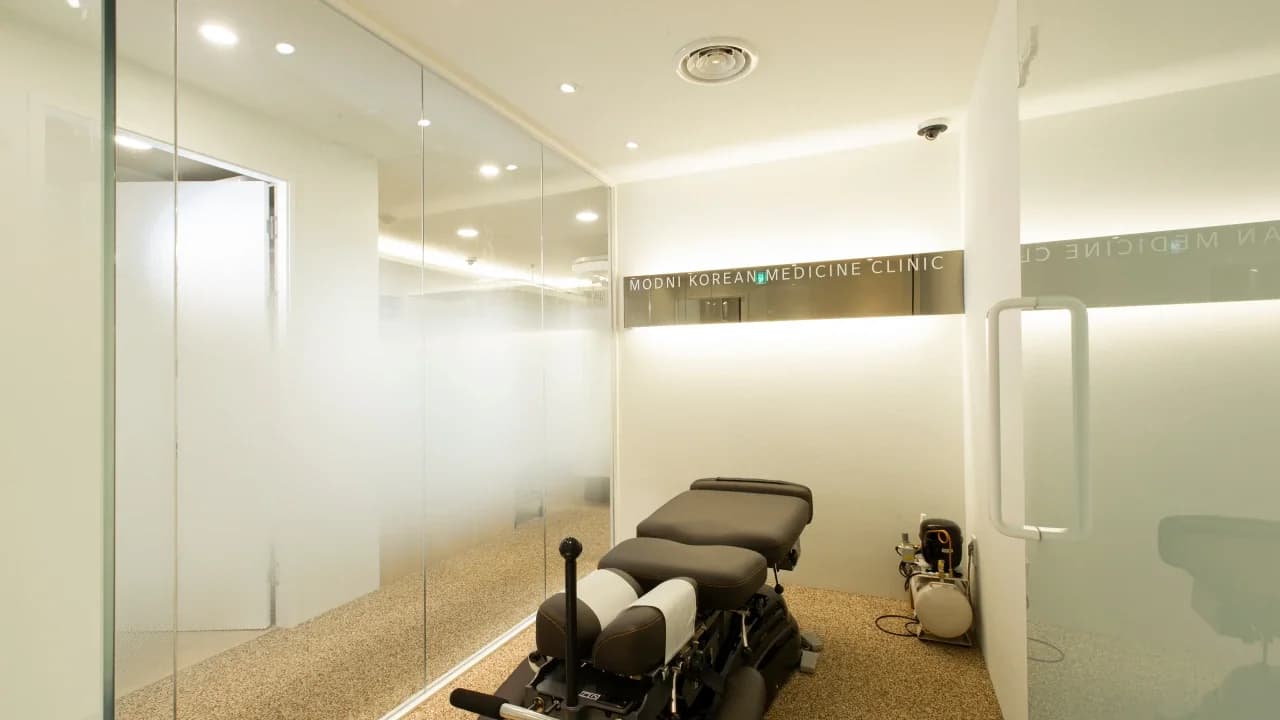
Everyday posture and pain
Long hours of sitting at work or looking down at a screen place repeated strain on particular areas of the neck, shoulders and lower back. Yet there is no single 'correct posture'. Because body types, work and lifestyles differ, the posture each person can hold comfortably for a long time also differs.
So rather than a single static posture, MODNI first checks where it hurts when you move and which movements are limited.
Movement assessment and muscle function
- Joint range of motion
- We check limits and uncomfortable points when turning, bending and tilting the neck back, raising the shoulders, and bending and straightening the lower back.
- Observing alignment
- From the side and back we look at the position and left–right height of the ears, shoulders and pelvis. Even if there is a difference, we do not assume it is a problem in itself; we look at how it relates to your symptoms.
- Muscle tension
- We check tension and tenderness in the muscles around the neck, shoulders, back and lower back by hand.
- Daily patterns
- We also ask about your work environment, sleeping posture and exercise habits.
What is Chuna therapy?
Chuna therapy is a Korean medicine manual therapy in which a Korean medicine doctor uses the hands, other parts of the body or assisting tools to assess and adjust the movement of the spine and joints and the surrounding muscles and ligaments.
Because it works on the joints by hand, it is sometimes compared to chiropractic, but it is a separate treatment performed by Korean medicine doctors within the diagnostic framework of Korean medicine. Depending on your condition, methods range from gently stretching muscles and soft tissue to adjusting joint movement.
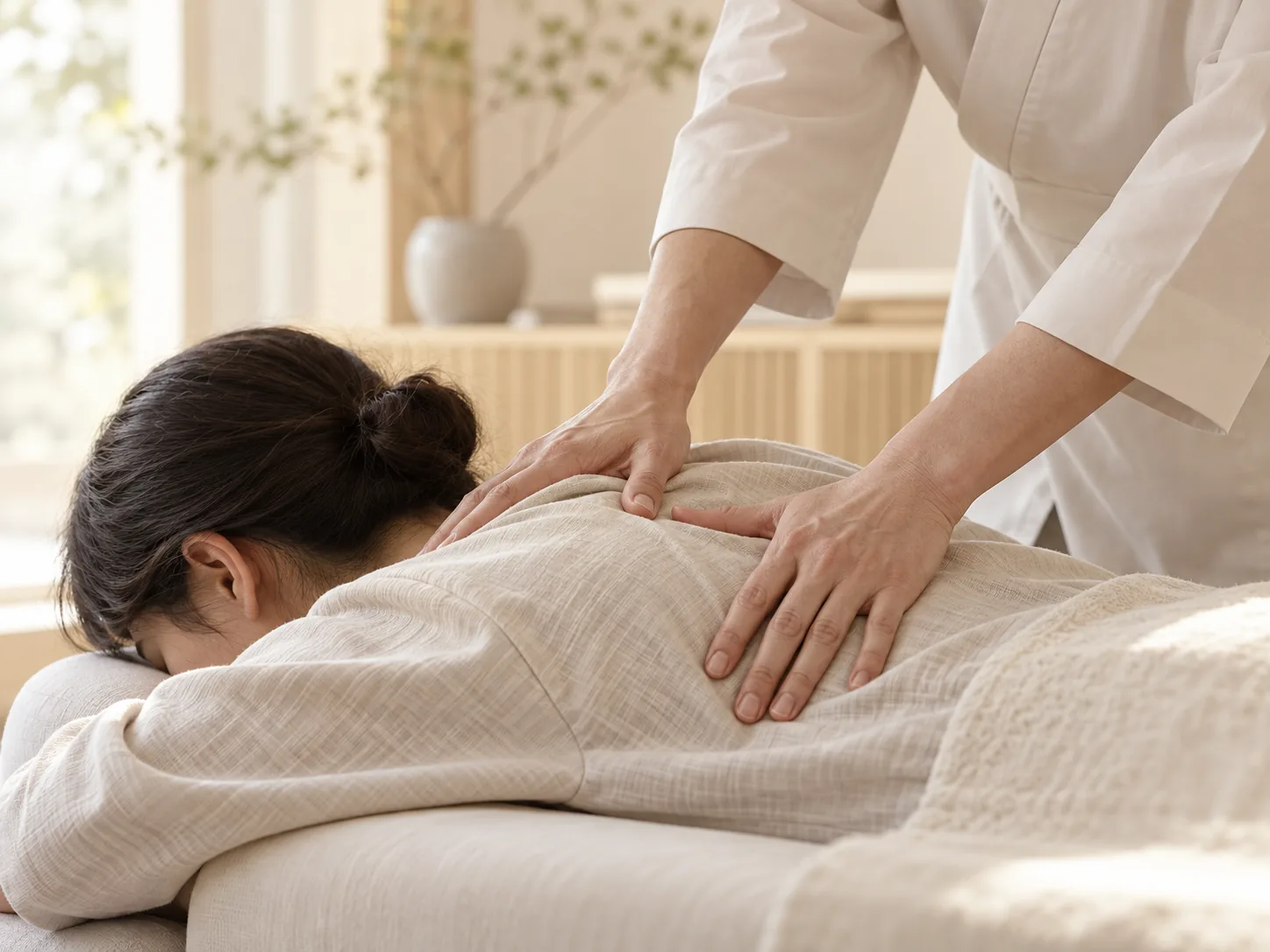
How it is applied in practice
- 01
Examination
We check the uncomfortable area and movements, your posture and habits, and the range of motion of the joints.
- 02
Checking suitability
We first check whether there is any condition for which Chuna therapy is not appropriate.
- 03
Chuna treatment
We choose the method and intensity suited to your condition. If you feel uncomfortable, please tell us right away.
- 04
After treatment
There may be temporary stiffness. We explain what you can do in your posture and daily life.
Combined care such as acupuncture and pharmacopuncture
We do not rely on Chuna therapy alone; other care may be combined depending on the examination.
Acupuncture / electroacupuncture
Acupuncture is applied to tense muscles and to acupoints in the uncomfortable area.
Pharmacopuncture
When needed, a solution extracted from herbal medicinal ingredients is injected into acupoints.
Cupping / heat therapy
May be used to help ease muscle tension.
When checks are needed before treatment
In the following cases we may not perform Chuna therapy, or may first recommend assessment by another specialty. If any of these apply, please be sure to tell us at the examination.
- A recent fracture or serious injury
- Severe osteoporosis
- Suspected tumour or infection
- Rapidly worsening numbness or weakness in the arms or legs, or problems with bladder or bowel control — immediate assessment at a medical facility
- Pregnancy
Health insurance coverage
Chuna therapy is covered by Korean national health insurance under certain conditions, such as musculoskeletal disorders. Coverage and the patient's share of the cost depend on the diagnosis and the type of procedure, and we will explain them after the examination.
Daily care
- 1Rather than holding one position for a long time, change position and move lightly every 30–60 minutes.
- 2Setting your monitor at a height where your gaze does not drop much can help reduce strain on the neck.
- 3For a day or two after treatment, light walking is recommended rather than strenuous exercise.
Frequently asked questions
Can it hurt after treatment?
Some people feel stiffness for a day or two after treatment. If the pain gets worse or numbness develops, please contact us right away.
Will my body shape change right away?
Chuna therapy is a treatment that works on the movement of joints and muscles, and it does not promise a change in body shape. We check progress based on changes in discomfort and movement.
Can I receive it together with facial asymmetry or TMJ care?
Yes. Neck and shoulder tension is also connected with the balance of the jaw and face, so depending on the examination they can be combined.
Related medical articles
All topics- Chuna therapyWhat is Chuna therapy, and what should you be careful about?In preparation
- PainWhy the neck and shoulders stiffen when you sit at work for long hoursIn preparation
Related pages

Your doctor
Director Oh Kyung-seok, KMD
Graduate, College of Korean Medicine, Gachon University · The director personally provides care, from assessment through follow-up.
Last updated Medical review in progress