
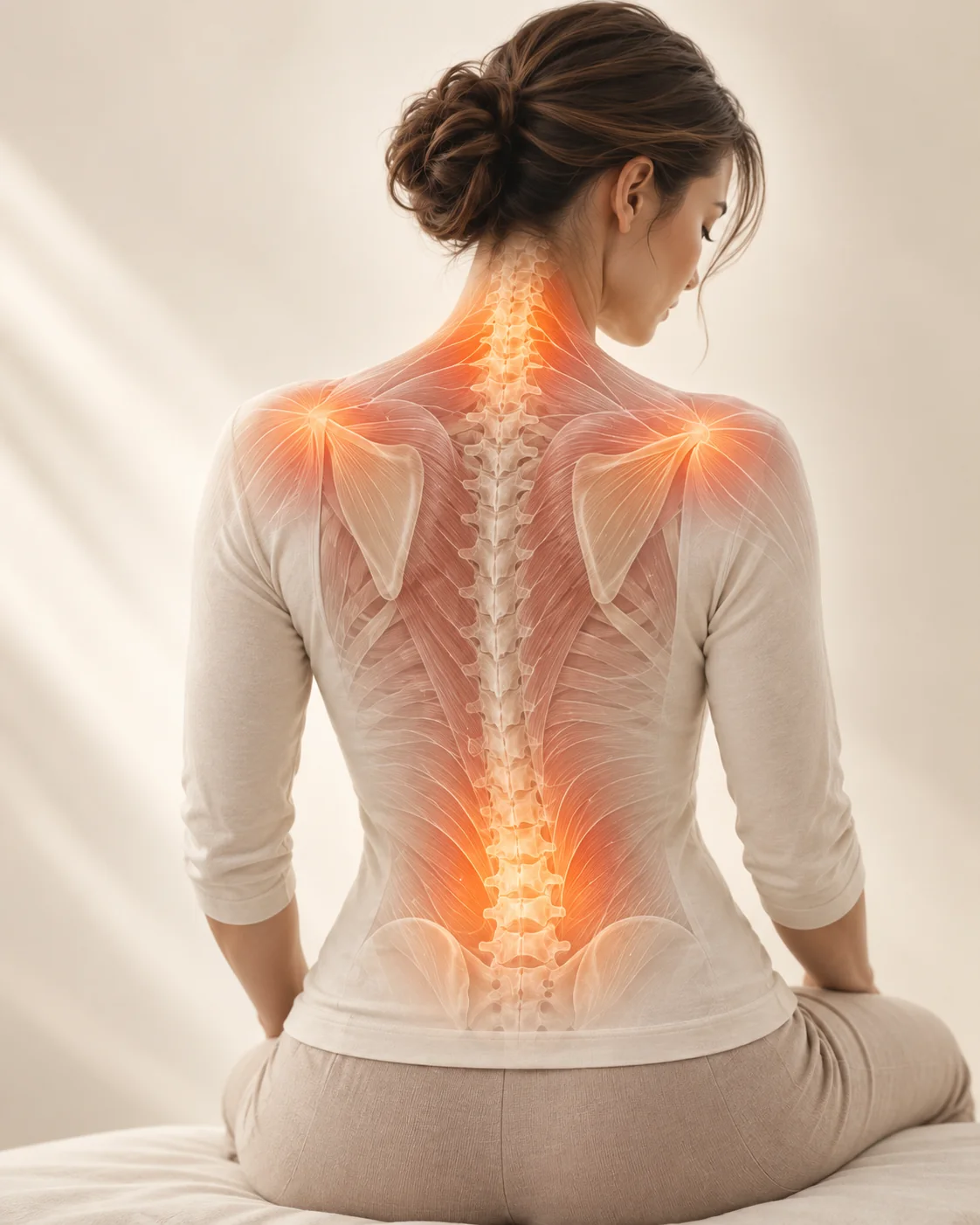
What we check by area
- Neck pain
- We check for limits when turning or bending the head, stiffness at the back of the neck and the base of the skull, and numbness radiating into the arm.
- Shoulder pain
- We check for pain when raising the arm or reaching behind, whether it hurts at night, and tension in the muscles at the top of the shoulder.
- Lower back pain
- We check for pain when standing up from sitting or bending and straightening the back, and numbness running down the leg.
How long the pain has lasted and its pattern
How long you have had the pain, whether it started suddenly or gradually, and whether it eases with rest or gets worse at night are important clues for deciding the direction of care.
Long-standing pain often involves daily habits and patterns of muscle use, so alongside treatment we look together for things you can change in daily life.
Functional assessment
- 01
History
How it started, how long, which movements and times of day hurt, work and exercise habits
- 02
Movement check
Joint range of motion and the angle at which pain appears
- 03
Palpation
Muscle tension and tender spots
- 04
Explanation and plan
We explain what was found, the methods of care and the expected course
Methods of care
Methods are combined as needed based on the examination. Responses to treatment differ from person to person.
Acupuncture / electroacupuncture
Acupuncture is applied to the painful area and related acupoints, with a mild electrical stimulus if needed.
Cupping
Uses negative pressure to help ease muscle tension.
Heat therapy
Heat is applied to help the muscles relax.
Pharmacopuncture
When needed, a solution extracted from herbal medicinal ingredients is injected into acupoints.
Chuna therapy
Considered when limited joint movement is also present.
Symptoms that need assessment or referral to a medical facility first
- Severe pain or deformity after a fall or accident — imaging to check for a fracture
- Weakness or reduced sensation in the arms or legs, or problems with bladder or bowel control — immediate emergency assessment
- Fever, unexplained weight loss, or night pain that does not ease with rest
- Shoulder or back pain accompanied by chest pain or shortness of breath — emergency department
Daily care
- 1In the first few days when the pain is severe, keep moving within a comfortable range rather than stretching hard.
- 2When working seated, get up and move lightly every 30–60 minutes.
- 3Check your pillow height so your neck is not bent too far while you sleep.
Frequently asked questions
How is this different from physical therapy?
At MODNI, a Korean medicine doctor examines you and then chooses the methods you need from Korean medicine care such as acupuncture and electroacupuncture, cupping, heat therapy, pharmacopuncture and Chuna. If imaging appears necessary, we will tell you that as well.
Should I bring MRI or X-ray results if I have them?
If you have them, they are helpful for your care. Please bring the radiology report or the images.
Related medical articles
All topics- PainWhy the neck and shoulders stiffen when you sit at work for long hoursIn preparation
Related pages

Your doctor
Director Oh Kyung-seok, KMD
Graduate, College of Korean Medicine, Gachon University · The director personally provides care, from assessment through follow-up.
Last updated Medical review in progress